
Cart (0)
BREEAM Infrastructure: Fv.44 Bussveien sustainable urban busway
The largest individual section of Norway’s Bussveien — set to become Europe’s longest dedicated busway when complete — has earned a BREEAM Infrastructure Very Good rating. The 2.5 km Stasjonsveien–Gauselvågen section cut embodied carbon in cast-in-place concrete and reinforcement by 61% and diverted 99% of waste from landfill, and opened to traffic a full year ahead of schedule.
Overview
Rogaland County Council partnered with contractor KSR ANS — a joint venture of Risa AS and Contur AS — and designer COWI AS to deliver the Fv.44 Bussveien section from Stasjonsveien to Gauselvågen. The project was assessed against the BREEAM Infrastructure Projects V6 Design & Construction Award, achieving a Very Good rating. It opened to traffic in September 2025, one year ahead of schedule.
About
Rogaland County Council is the client. Delivery was led by KSR ANS, a partnership of Risa AS and Contur AS, with COWI AS responsible for engineering and design. Marit Henriksen of Risa AS served as the BREEAM Infrastructure assessor, with Caroline Hutson of Environmental Consultancy providing independent verification.
Background
Bussveien is one of Norway’s largest transport infrastructure projects. When complete, it will be Europe’s longest dedicated busway — 25 sections spanning approximately 50 kilometres. Several stretches have already been completed, while others are under construction or in planning. The programme sits within the Bymiljøpakken (Urban Environment Package), a regional initiative aimed at curbing growth in car traffic and its environmental impact by creating a more attractive, efficient and predictable public transport system across the Stavanger region.
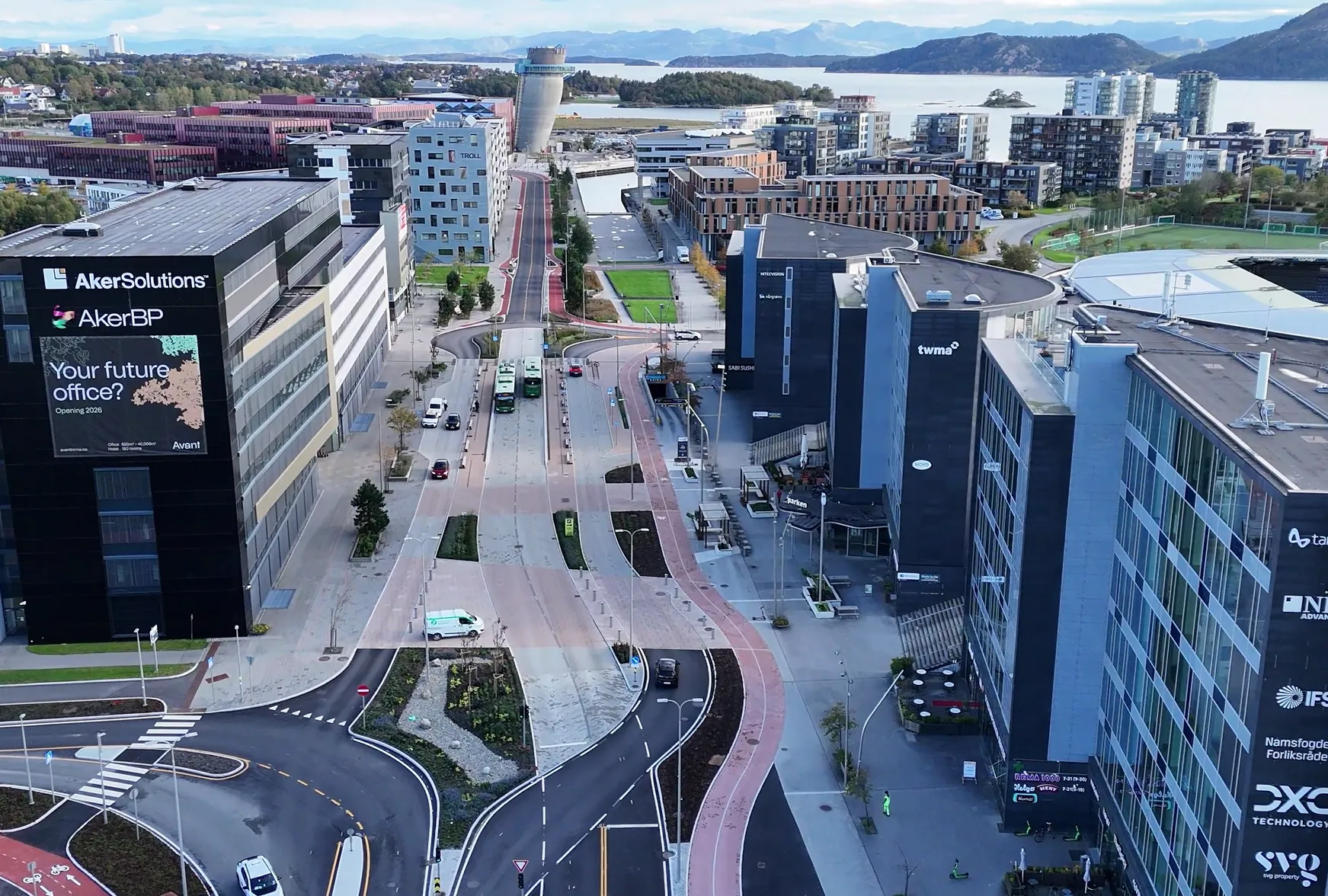
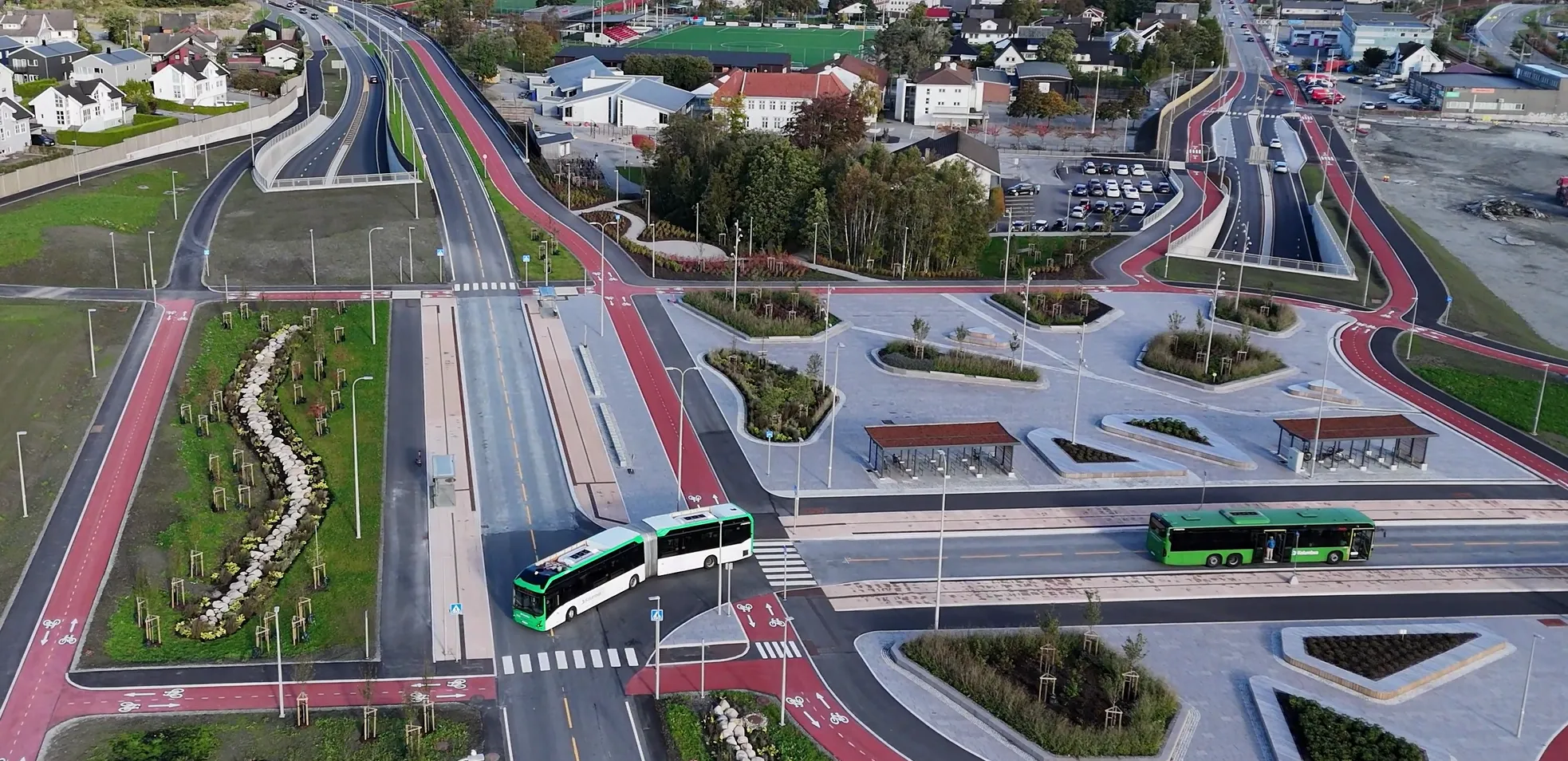
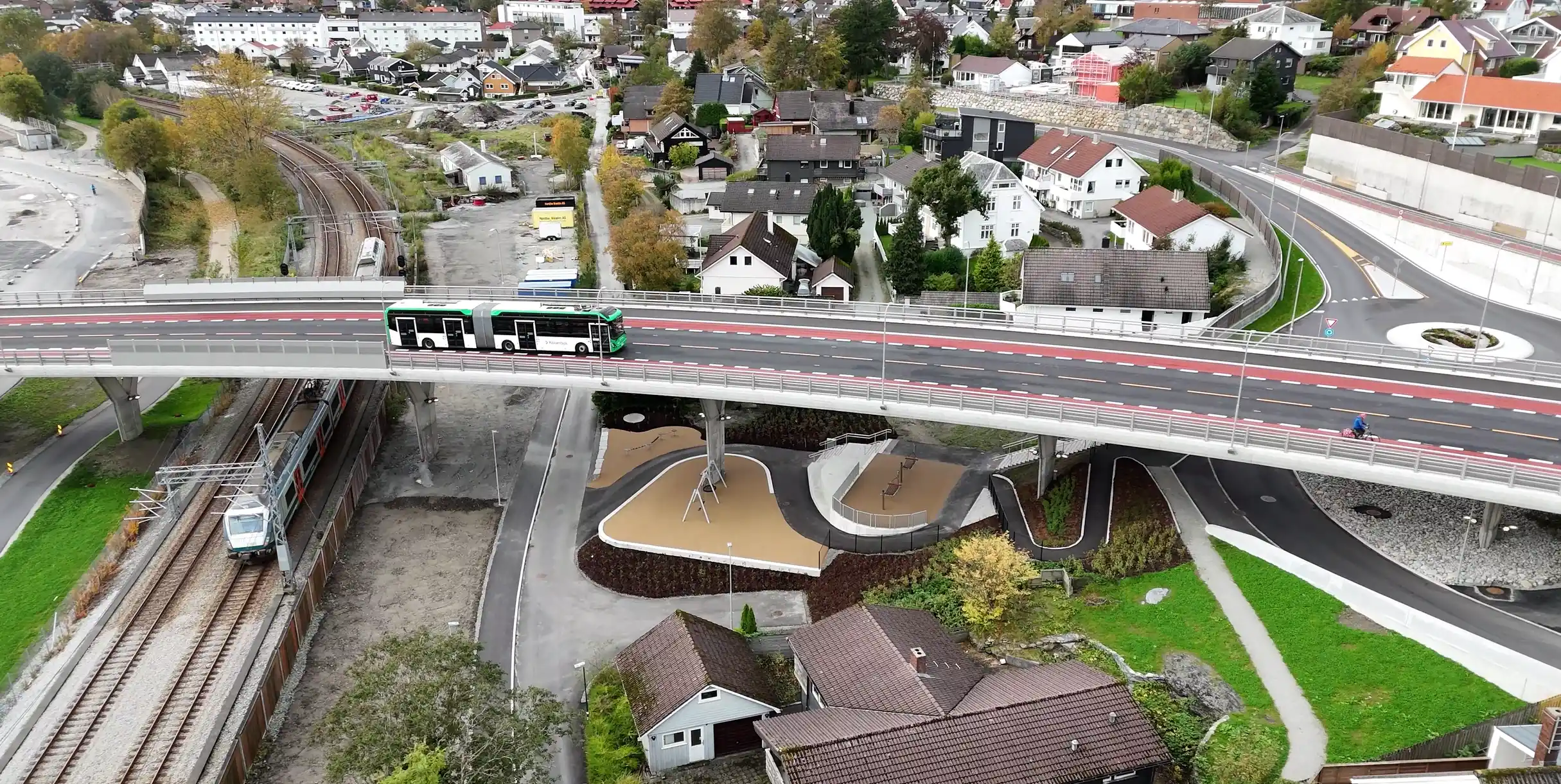
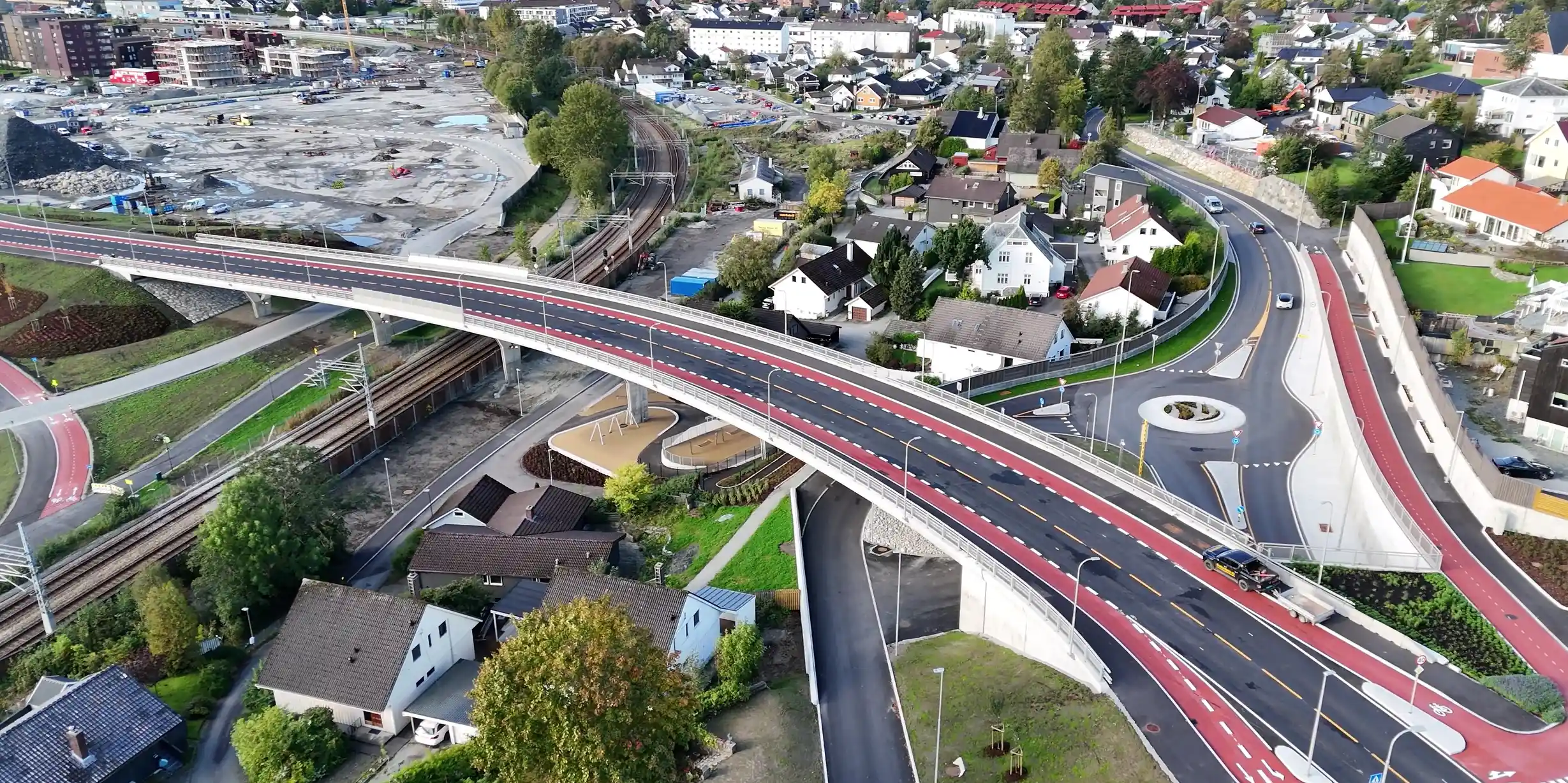
The Stasjonsveien–Gauselvågen section is the largest individual development within the entire Bussveien system. Unlike many other sections, buses here operate in a dedicated corridor separated from car traffic, providing predictable journey times and high capacity. Major structures include a 450-metre culvert routing cars beneath the busway at Hinnasvingene, a 165-metre bridge over the railway at Hinnavågen, and a lid over the roundabout at Jåttå Upper Secondary School that creates a central mobility hub linking buses, trains, cycling and walking into an integrated system.
Challenges
The busway runs through a densely populated urban area, and the primary challenge was keeping existing traffic flowing while building a new, continuous bus route through it. The project team addressed this by minimising the number of construction phases to reduce noise, congestion and environmental impact, and by monitoring and surveilling traffic throughout the works. A second challenge was the logistics of moving a large volume of excavated rock, soil and construction materials within a constrained site. A detailed materials management plan and optimised transport routes reduced empty-truck movements and unnecessary trips.
Solutions
The team used the BREEAM Infrastructure framework to drive sustainable decision-making across design, planning and execution. Documentation requirements embedded environmental responsibilities across the organisation, with project management actively involved in sustainability decisions rather than treating them as a bolt-on. Key measures included:
- A zoning plan change that elevated one of the major structures — reducing material use, cutting excavation volumes and eliminating flood risk in a single design decision.
- On-site crushing and separation of all uncontaminated concrete for reuse within the road construction, with all reinforcement metal sent to a recycling facility.
- Preservation of several existing water and wastewater pipelines, including manholes, avoiding both new material purchases and the excavation and disposal of the original systems.
- Reuse of all excavated and blasted rock — either as bulk fill within the project or on an external site.
- Selection of lower-embodied-carbon concrete and asphalt products to reduce emissions associated with the largest material streams.
- A detailed materials management plan and optimised transport routes to minimise empty-truck journeys and unnecessary trips.
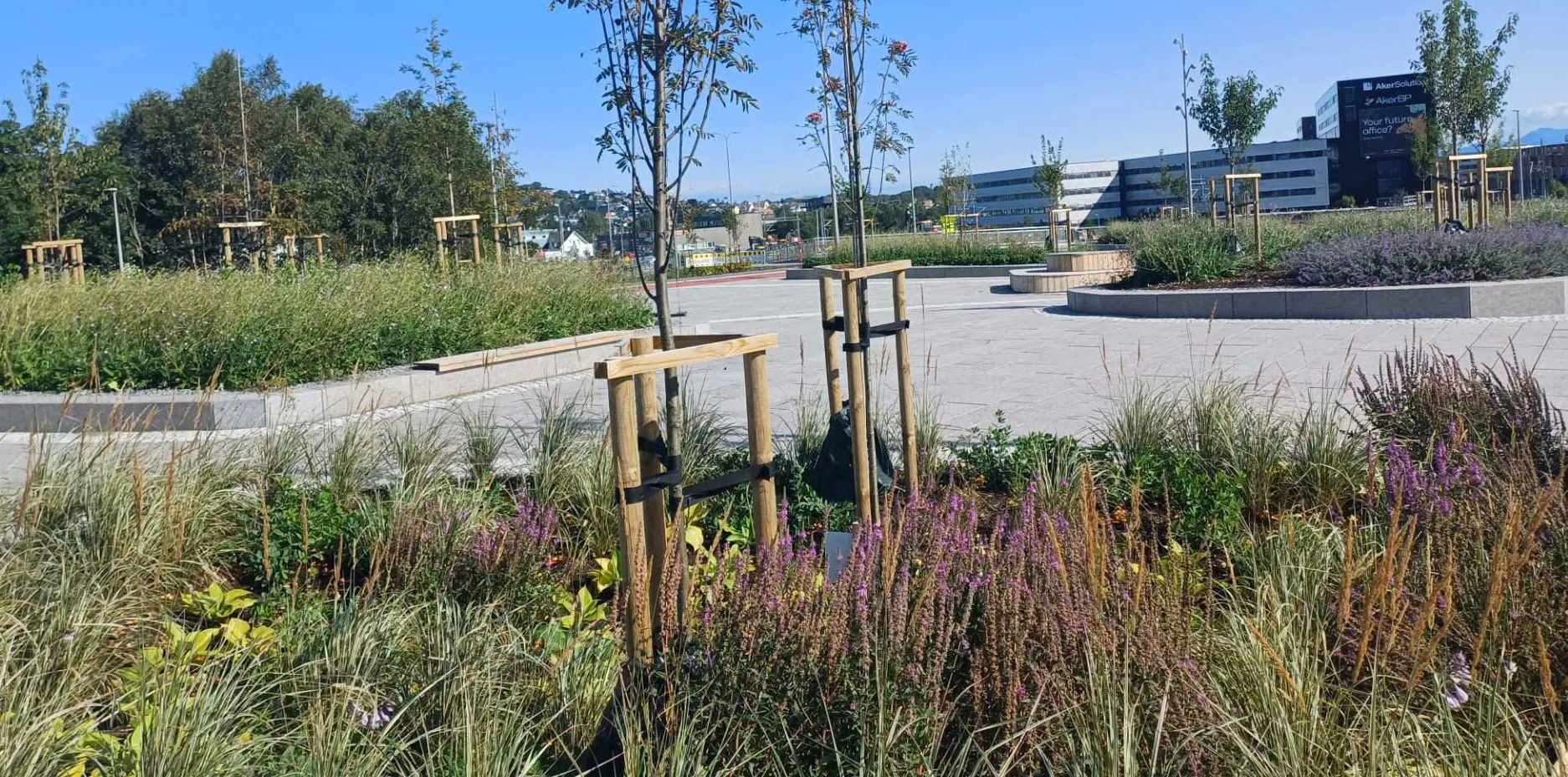
- Extensive landscaping with planting boxes, pergolas, perennial flowers, trees and grasses, transforming what was previously a brown space into a green corridor.
- A new walking and cycling network along the route, connecting two previously separated residential areas and opening up improved recreational access.
- A playground and outdoor workout area delivered alongside the busway, giving direct community benefit beyond the transport function.
Benefits
The project delivered measurable sustainability outcomes alongside faster-than-scheduled delivery:
- 61% reduction in embodied carbon for cast-in-place concrete and reinforcement (14,702,360 kgCO₂e).
- 99% of waste diverted from landfill — 364,450 tonnes of inert and ordinary waste combined.
- Reduced material purchases and excavation costs through pipeline preservation and comprehensive rock reuse.
- Flood risk removed from a major construction element through early design change.
- Designed for future-use flexibility and structural longevity, including the ability to adapt to other transport modes over time.
- New green corridor with perennial plantings, improving local biodiversity and the travel experience.
- New walking and cycling network connecting previously separated communities, with a playground, workout area and mobility hub integrated into the scheme.
- Delivered one year ahead of the planned schedule, with BREEAM Infrastructure used from bid through completion to keep the sustainability profile consistent.
The implementation of BREEAM as a certification tool has consistently promoted sustainable decision-making throughout the design, planning, and execution phases of the project.
Summary
Client:
Rogaland County Council
Contractor:
KSR ANS (Risa AS and Contur AS)
Designer:
COWI AS
Assessor:
Marit Henriksen, Risa AS
Verifier:
Caroline Hutson, Environmental Consultancy
BREEAM Infrastructure rating:
Very Good
Browse more from our latest case studies:
Case Study
Majorstuen station upgrade in Oslo achieves BREEAM Infrastructure Outstanding
UK & Ireland
Luas Finglas: Ireland’s first BREEAM Infrastructure Excellent rating
UK & Ireland
BREEAM Infrastructure: 10 Dock Facility submarine dockyard excellence
UK & Ireland
BREEAM Infrastructure: Hove Hensetting rail stabling excellence
Case Study
BREEAM Infrastructure: Fv.44 Bussveien sustainable urban busway
Case Study
BREEAM Infrastructure: Oslo’s sustainable tunnelling excellence
Case Study
Transpennine Route Upgrade (TRU) Programme BREEAM Infrastructure
Case Study