
Cart (0)
Housing Stock Modelling for Local Authorities
Housing Stock Modelling (HSM) involves the use of statistical models to estimate key housing variables at a dwelling-level, giving local authorities the insights they need to assess housing conditions and energy performance across their communities.
This local housing information is vital for maintaining a strategic understanding of the housing stock and for directing resources where they are most needed—particularly in the private sector, where insights are harder to obtain and legislation continues to evolve.
Developed by BRE as a cost‑effective alternative to large‑scale physical surveys, our approach has been continuously refined since 2003 and is now relied upon by hundreds of local authorities.
How councils use Housing Stock Modelling
Local authorities use Housing Stock Modelling to support evidence‑led decisions across housing, energy, health and enforcement priorities, including:
✔ Target housing interventions more effectively
✔ Support decarbonisation through targeted retrofit
✔ Tackle fuel poverty by identifying households most at risk
✔ Prioritise investment in energy efficiency
✔ Support improved health and well-being through housing
Trusted by local authorities since 2003
Hundreds of councils have benefited from our housing stock modelling approach to support housing strategy, evidence-led decision-making, and delivery.
Overview: Housing Stock Modelling and the HSCD
Turning Housing Data into Insight for Local Decision-making
Housing Stock Modelling provides dwelling-level intelligence to support strategic decision-making and day-to-day delivery. Every organisation has unique priorities. That’s why we offer flexible options — from a range of modelled output data to bespoke analysis tailored to local priorities — allowing you to choose the insights that matter most and create a service package that's aligned to your goals and budget.
Assessment of housing standards and household insights to identify areas with the poorest quality housing and target enforcement or intervention activity.
Modelled outputs provided from the HSM include dwelling-level estimates of:
Category 1 HHSRS
Hazards
Category 1 HHSRS
Excess Cold
Category 1 HHSRS
Falls
Category 1 HHSRS
Damp & Mould Growth
Disrepair (Decent Homes Definition)
Fuel Poverty (LILEE)
Low Income Households
SimpleSAP Ratings
Understand the distribution of areas that could benefit from energy efficiency improvements to target funding.
We help local authorities estimate baseline energy efficiency and carbon emission levels by providing dwelling level datasets that include SimpleSAP ratings and household insights, such as fuel poverty (LILEE) and low income households, to gain insights that support effective energy action planning.
Our insights cover:
- Wall types (solid/cavity)
- Cavity wall insulation
- Loft insulation levels
- CO₂ emissions
- Heating & energy costs per annum
- Heat, energy & electricity demands

Assess the strategic impact of energy efficiency and carbon reduction scenarios.
To support your journey to net zero we model the impact of a range of energy efficiency measures - from low-cost insulation upgrades to advanced solutions like heat pumps and photovoltaics - providing strategic oversight across the whole stock. Our analysis includes:
- Assessment of potential savings from eight improvement scenarios from dwelling level to whole stock level
- Estimated energy, carbon and cost savings
- Estimated costs to improve the energy efficiency of the stock, supporting targeted investment

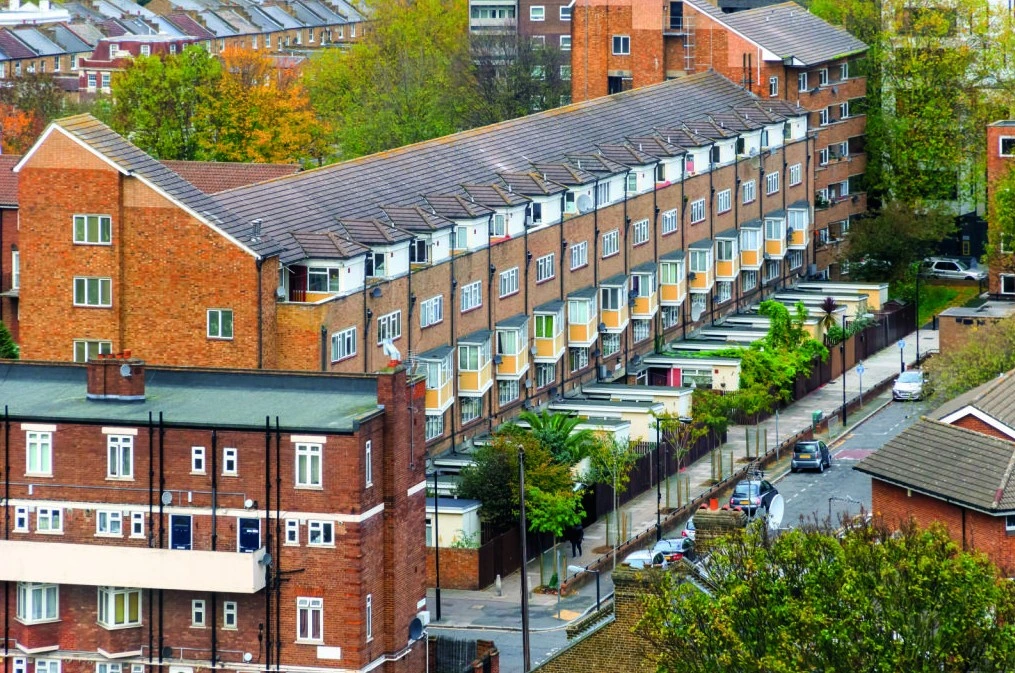
Identify areas where there could be dwellings more likely to be used as HMOs.
Our Housing models can provide estimates of potential mandatory licensable and non-licensable Houses in Multiple Occupation (HMOs) across your entire local authority area.
Used alongside local intelligence, this dataset provides information about properties with the potential to be used as an HMO and where these are likely to be concentrated.
Supporting decision-making through PRS insight
Our specialist Private Rented Sector analysis is based on the outputs of the Housing Stock Modelling and provides an independent data set which can be used alongside local intelligence to support decision making around discretionary licensing schemes. We examine various criteria including:
- Tenure insights
- Property condition
- Socio-economic factors
This analysis can assist councils in identifying areas where poor housing conditions are most likely to coincide with high PRS concentrations, ultimately helping to prioritise interventions that improve housing quality for tenants.

Quantify housing‑related health risks to support joint working with public health and ICBs.
Our Health Impact Assessment (HIA) combines BRE's extensive reaserch into the cost of poor housing with modelled outputs from the housing stock model to quantify impacts and economic costs, providing insights into the effect of poor housing on occupant health and the wider economy - all at a local level.
Separate from the Housing Stock Modelling report, the HIA report includes:
- Assessment of Housing Health and Safety Rating System (HHSRS) hazards and the estimated effects on occupant health
- Estimated cost of interventions
- Health cost-benefit analysis, including potential savings to the NHS and society

Tailored housing intelligence to address specific policy questions or emerging challenges
Every local area faces distinct housing challenges, and that's why our bespoke analysis builds on the Housing Stock Model to answer specific policy, investment and operational questions shaped around your local context. Working collaboratively with you, we design targeted analyses to support topics such as:
- exploring emerging policy priorities or funding opportunities
- responding to strategic questions from senior leadership
- addressing gaps in existing intelligence
- supporting business cases, strategies or programme design

Bespoke analysis can draw on dwelling level model outputs, linked datasets and external evidence, and may be delivered through targeted datasets, technical analysis, maps and visualisations, or concise briefing material.
This flexible approach enables you to:
- focus on the questions that matter most locally
- combine standard housing intelligence with tailored evidence
- commission a one‑off piece of work or develop a longer‑term analytical partnership
If you have a specific challenge in mind, we’re happy to discuss how bespoke analysis could help turn your housing data into actionable intelligence.
How it works
Our approach combines advanced statistical modelling techniques with national and local administrative data sources to build a detailed picture of housing condition and performance at a local level.
1. Data gathering and validation
We integrate local and national datasets, and apply rigorous quality checks to build bespoke stock models, reflecting local conditions.
2. Modelling and analysis
We use advanced statistical techniques to predict housing condition and energy performance at dwelling-level and across multiple geographic scales.
3. Reporting and delivery
The modelling outputs are delivered through our cloud-based Housing Stock Condition Database (HSCD), as well as a summary provided in our Housing Stock Modelling Report.
Housing Stock Condition Database
The modelled dwelling‑level outputs are delivered through the online Housing Stock Condition Database (HSCD), enabling councils to explore, monitor and report on their housing stock. Key features include the ability to:
- Explore and summarise housing data by tenure, geography and household insights
- Cross-reference variables to derive new indicators
- Visualise data on interactive maps to support reporting and decision making
Housing Stock Modelling Report
Alongside the dwelling-level data offered through the HSCD, we deliver a comprehensive report comprising a variety of summary tabulations, maps and commentary, giving overview of the results.
Get in touch
For more information about Housing Stock Modelling and the HSCD, and how it can support your local housing priorities, please get in touch.
Contact us
The BRE Project enables Eden District Council (EDC) to have a greater understanding of the condition of the district's housing stock. The online BRE database means that we can continually access information and update the data as required.
FAQs
Housing Stock Modelling (HSM) is a data-driven approach used to understand and predict the characteristics, performance, and future needs of housing assets. It combines property-level local data with advanced statistical and analytical techniques to create a comprehensive picture of the housing stock, supporting housing strategies, statutory requirements and enabling resources to be targeted to where they are needed most. Contact our team to find out how your organisation can benefit from HSM.
We begin with a conversation so we can understand your needs and agree the best package to achieve your desired outcomes. The BRE project team have the experience and knowledgeto support and assist you, ensuring you gain the maximum benefit from our service.
When you are happy to proceed you will need to provide BRE with the agreed local data sets we will check and validate this and then include it in our modelling to create an integrated housing stock model. The model predicts housing condition and energy performance at the dwelling level and at various geographies across your area. Finally, we deliver the results through our easy-to-use online Housing Stock Condition Database (HSCD) alongside a comprehensive report summarising the key results which will include a variety of maps giving the data geographical local context.
You will find that with BRE there is no ‘hard sell’ and providing the service to the Public Sector feeds into BRE’s wider ambition of improving the Built Environment.
No two HSM projects are the same, each is bespoke, BRE have provided a HSM service for many years and have worked with over 50% of the Local Authorities in England as well as National Governments, we are well versed in what we do but haven’t stood still, the HSM is regularly reviewed and is continuing to evolve to meet clients current, emerging and future needs. Interested to learn more? Contact our team
To create bespoke housing stock models, customers typically provide locally sourced administrative data. The data sets being integrated will vary depending on availability and your specific project requirements. BRE’s model also integrates available Energy Performance Certificate (EPC) records. Our team will guide you through the data specification process and offer support to fill gaps where information is incomplete.
Please note that BRE is fully compliant with Data Protection legislation and can only accept local data sets once a customer is under contract with BRE, customer data is provided securely and is deleted swiftly after the project has been delivered.
Latest case studies
Explore case studies of our recent work

Housing Stock Condition Database (HSCD)