
Cart (0)
BREEAM Infrastructure: Hove Hensetting rail stabling excellence
Bane NOR’s new rail stabling facility near Lillehammer has earned a BREEAM Infrastructure rating of Excellent (76.69%) — cutting embodied carbon by 34%, reusing 68% of materials and retaining around 99% of excavated mass on site.
Overview
Bane NOR partnered with main contractor Baneservice AS, subcontractor Gjerdalen Entreprenør AS and designer and BREEAM Infrastructure assessor Multiconsult Norge AS to deliver the Hove Hensetting stabling facility on the Dovre Line. The works ran from September 2024 to January 2026.
The project team set out to go beyond the client’s contractual sustainability requirement. They aimed higher — and delivered. A BREEAM Infrastructure Excellent rating of 76.69% rewards a systematic focus on carbon reduction, resource reuse, water protection and community impact.
About
Bane NOR is Norway’s state-owned railway infrastructure manager, responsible for owning, operating, maintaining and developing the national railway network. Baneservice AS acted as main contractor. Gjerdalen Entreprenør AS led groundworks, structural works and water and wastewater installations. Multiconsult Norge AS served as designer and BREEAM Infrastructure assessor.
Background
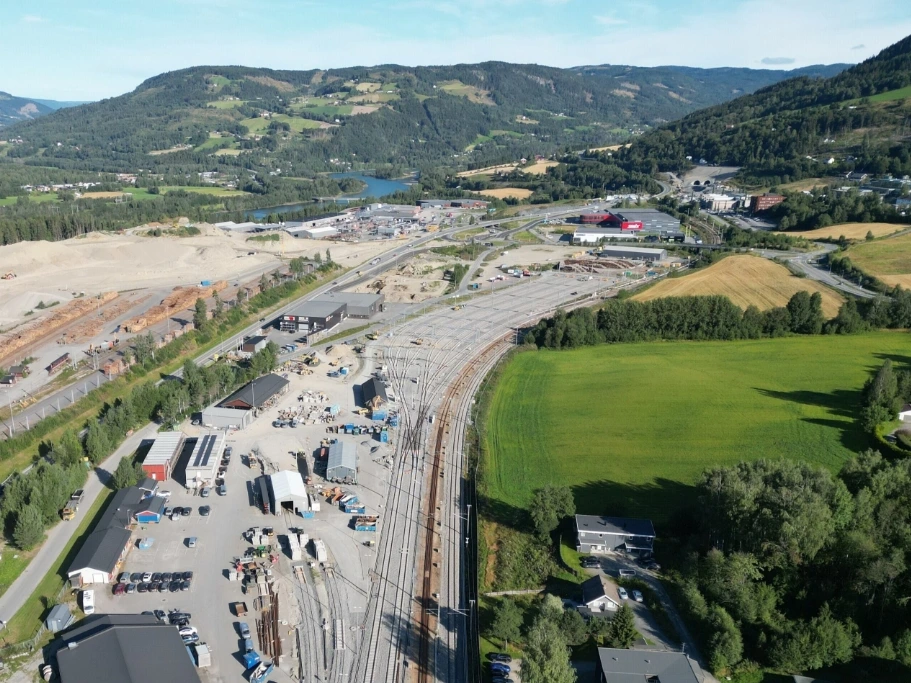
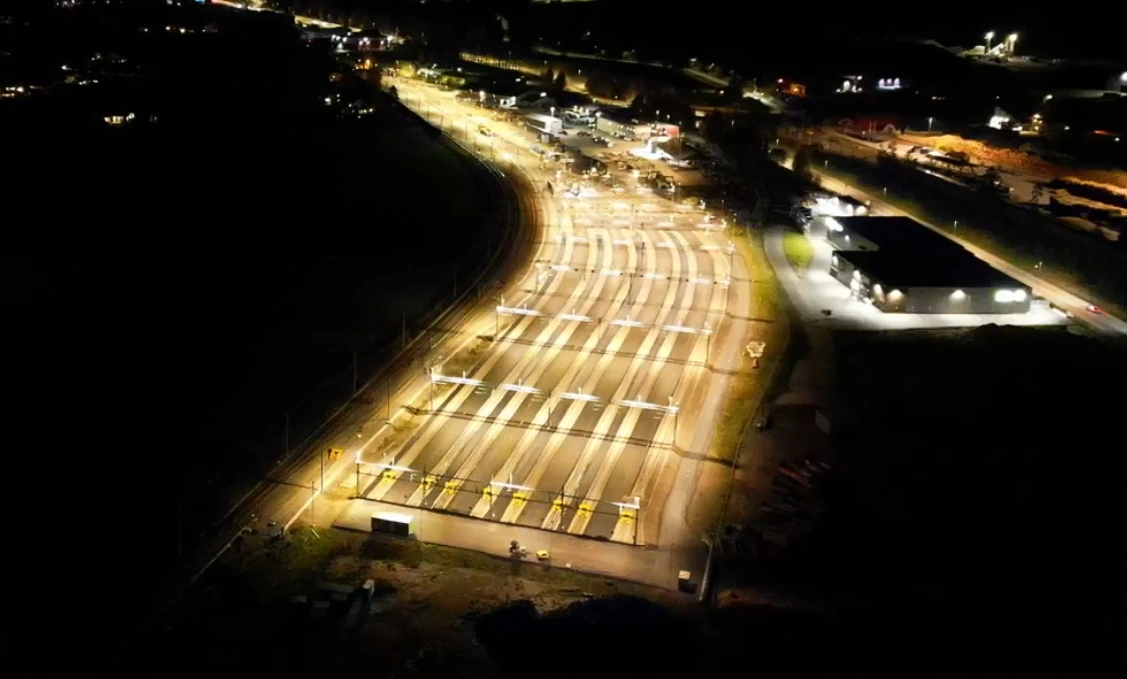
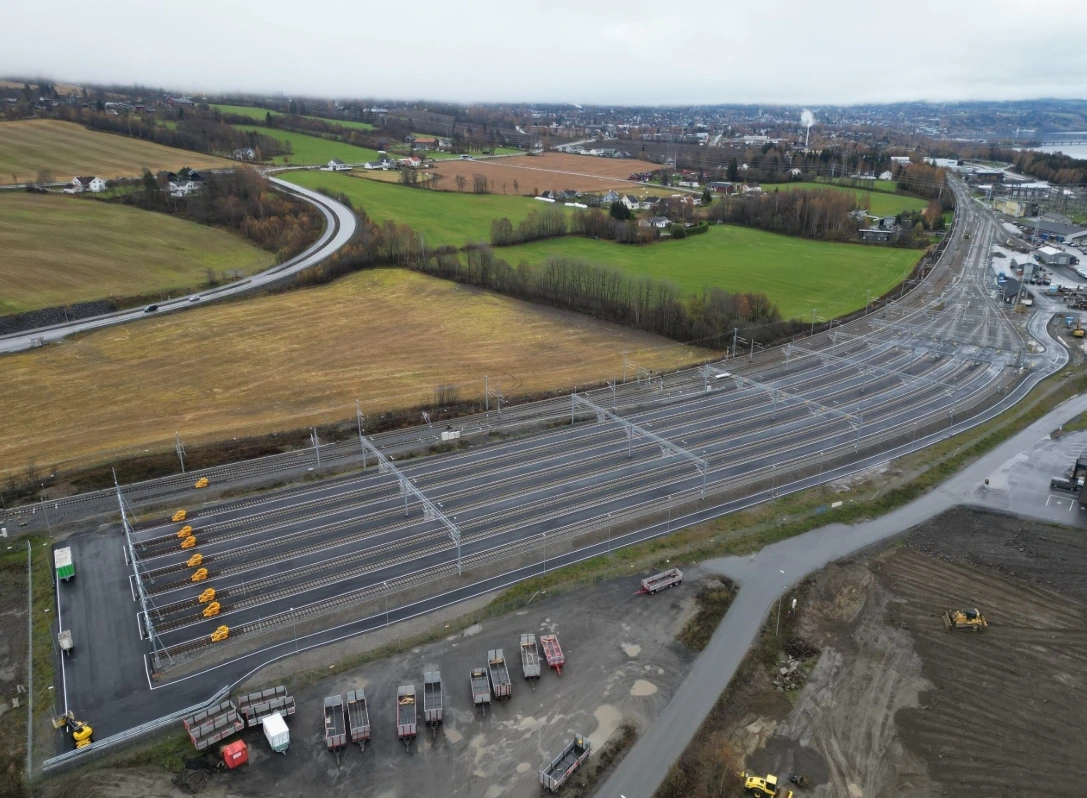
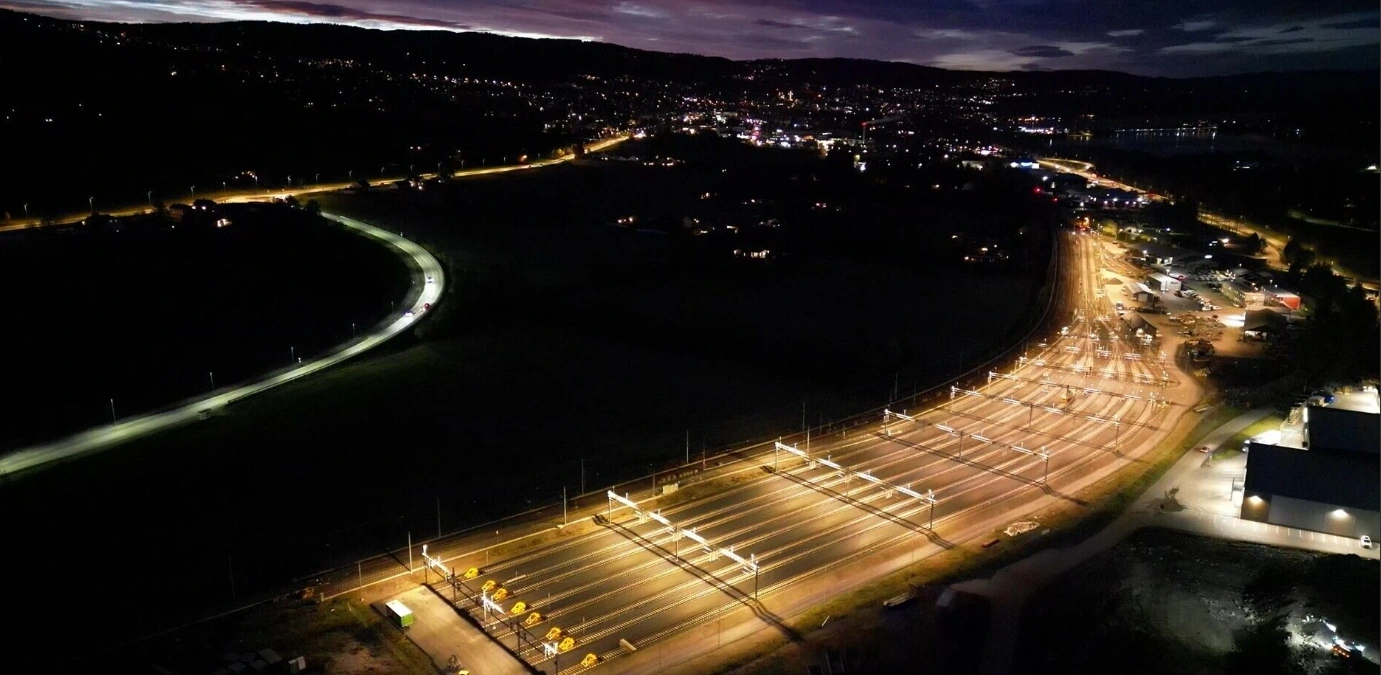
The new facility sits around 3 km north of Lillehammer centre. It provides 16 stabling positions under an energised overhead contact line, distributed across eight tracks. New connections to the Dovre Line run both to the north and the south, with a shunting track to the south. The project also upgraded a branch to the Hove operations base and timber terminal, and upgraded the overhead contact line system between Hove and Fåberg.
The full scope covered track construction, overhead contact line, signalling, telecommunications, low-voltage systems, cable routing, groundworks, structural works, and water and wastewater systems. Older installations, cables, foundations and cable routes were demolished, and construction sites will be restored to their original condition on completion.
Challenges
The site combined demanding environmental constraints with complex logistics. Proximity to the River Bæla meant aquatic habitats had to be actively protected throughout construction. Contaminated soil and masses containing invasive plant species complicated handling and reuse. The location near a drinking water source required a robust drainage and groundwater protection strategy. Neighbours were affected by noise and vibration during the works, and had to be kept informed and engaged as the project progressed.
Solutions
The team used the BREEAM Infrastructure framework to embed sustainability, risk management and performance monitoring from the outset. Early identification of environmental risks shaped a set of targeted, evidence-led measures:
- Hydrogeological mapping, two groundwater monitoring wells and a watertight membrane beneath the track area, integrated with an oil-separator system to protect drinking water sources.
- A climate-gas budget with workshops and follow-up tools, keeping carbon reduction central to decision-making throughout construction.
- Widespread use of electric machinery, alongside optimised material quantities.
- Detailed mass-handling plans with monthly reporting, including segregation of contaminated material and soil affected by invasive species, and approved disposal routes.
- Ecological surveys by a freshwater ecologist, sedimentation ponds, fish-friendly watercourse design, and carefully timed works during sensitive periods.
- Noise and vibration modelling, acoustic barriers, continuous monitoring and structured communication with neighbours.
- Dismantling, rather than demolishing, a large existing building so that it could be reassembled at another site — a reversal of the client’s original proposal that avoided demolition waste and transport to landfill.
Benefits
The project delivered measurable outcomes across carbon, resources, water protection and community impact.
- 34% reduction in embodied carbon emissions — exceeding the project’s 30% climate-budget target.
- 68% of materials reused across the works.
- More than 90% of usable demolition arisings reused on site.
- Around 99% mass balance, with excavated materials retained on site through detailed mass-handling plans.
- Reduced material purchasing and landfill disposal, with tracks, rock from the bridge over the Bæla, cable ducts and cables all reused.
- Drinking water sources protected, with no negative impact identified.
- Biodiversity enhanced through fish-friendly watercourse design and continuous ecological monitoring.
- Structured stakeholder engagement, reducing disruption for neighbours and local communities.
Summary
Client:
Bane NOR
Contractors:
Baneservice AS, Gjerdalen Entreprenør AS
Assessor:
Line Kristin Huserbråten Hafsal, Multiconsult Norge AS
Verifier:
Ian Mackay, Independent Sustainability Advisor
BREEAM Infrastructure rating:
Excellent (76.69%)
Browse more from our latest case studies:

Case Study
Luas Finglas: Ireland’s first BREEAM Infrastructure Excellent rating
Case Study
BREEAM Infrastructure: 10 Dock Facility submarine dockyard excellence
Case Study
BREEAM Infrastructure: Hove Hensetting rail stabling excellence
Case Study
BREEAM Infrastructure: Fv.44 Bussveien sustainable urban busway
Case Study
BREEAM Infrastructure: Oslo’s sustainable tunnelling excellence
Case Study
Transpennine Route Upgrade (TRU) Programme BREEAM Infrastructure
Case Study
BREEAM Infrastructure K2B tunnel Fornebubanen excellence
Case Study