
Cart (0)
Luas Finglas: Ireland’s first BREEAM Infrastructure Excellent rating
Transport Infrastructure Ireland’s Luas Green Line extension is the Republic of Ireland’s first project to earn a BREEAM Infrastructure Excellent rating.
Overview
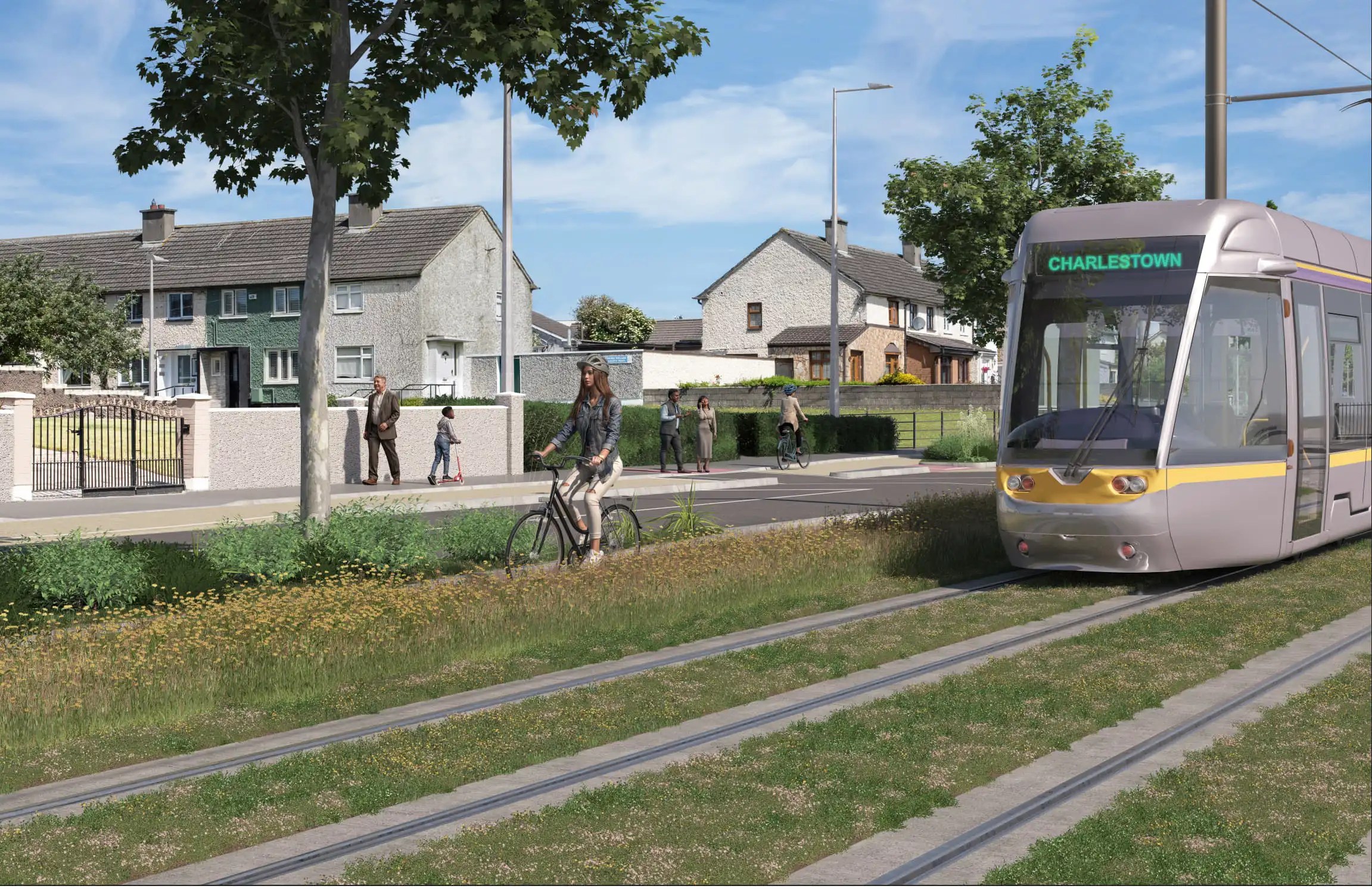
Luas Finglas will extend Dublin’s Luas Green Line by four kilometres, running from Broombridge to Charlestown. The scheme is the first project in the Republic of Ireland to achieve a BREEAM Infrastructure Version 6 rating. It is also the first transport project in the country to reach Excellent, scoring 83.73% at the Strategy and Design stage. The result sets a new benchmark for sustainable light rail in Ireland.
About
Transport Infrastructure Ireland (TII) plans, builds and operates the national road and light rail networks across Ireland. It delivers the Luas tram system in Dublin, one of the busiest light rail networks in Europe. Luas Finglas forms part of TII's wider programme to expand sustainable public transport acros the Greater Dublin area.
Background
The northside of Dublin has long needed a fast, reliable public transport link. Luas Finglas answers that need. The four-kilometre extension serves Charlestown, Finglas Village, Finglas West, St Helena’s and the Tolka Valley, while improving access to the city centre and the wider M50 corridor.
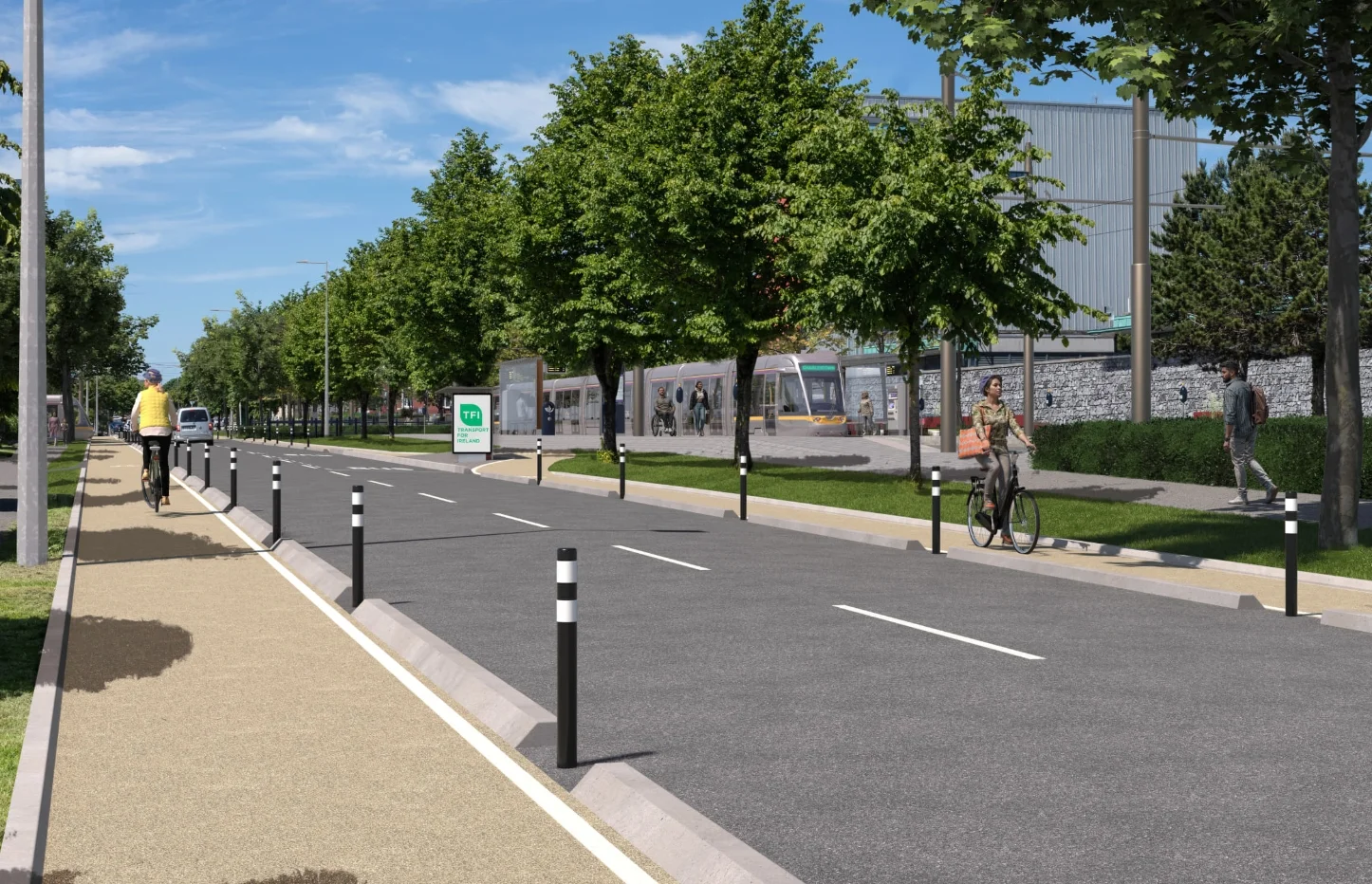
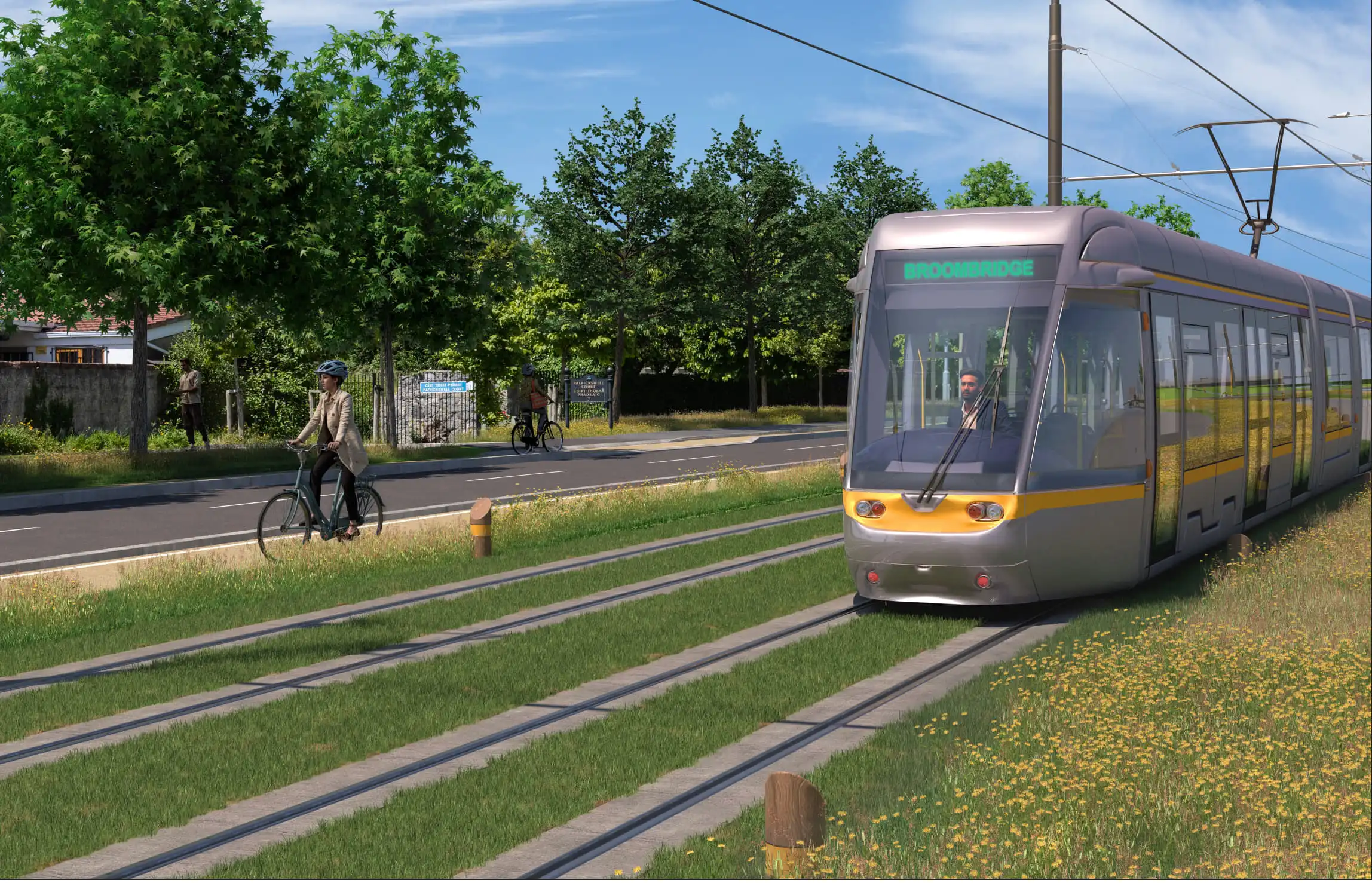
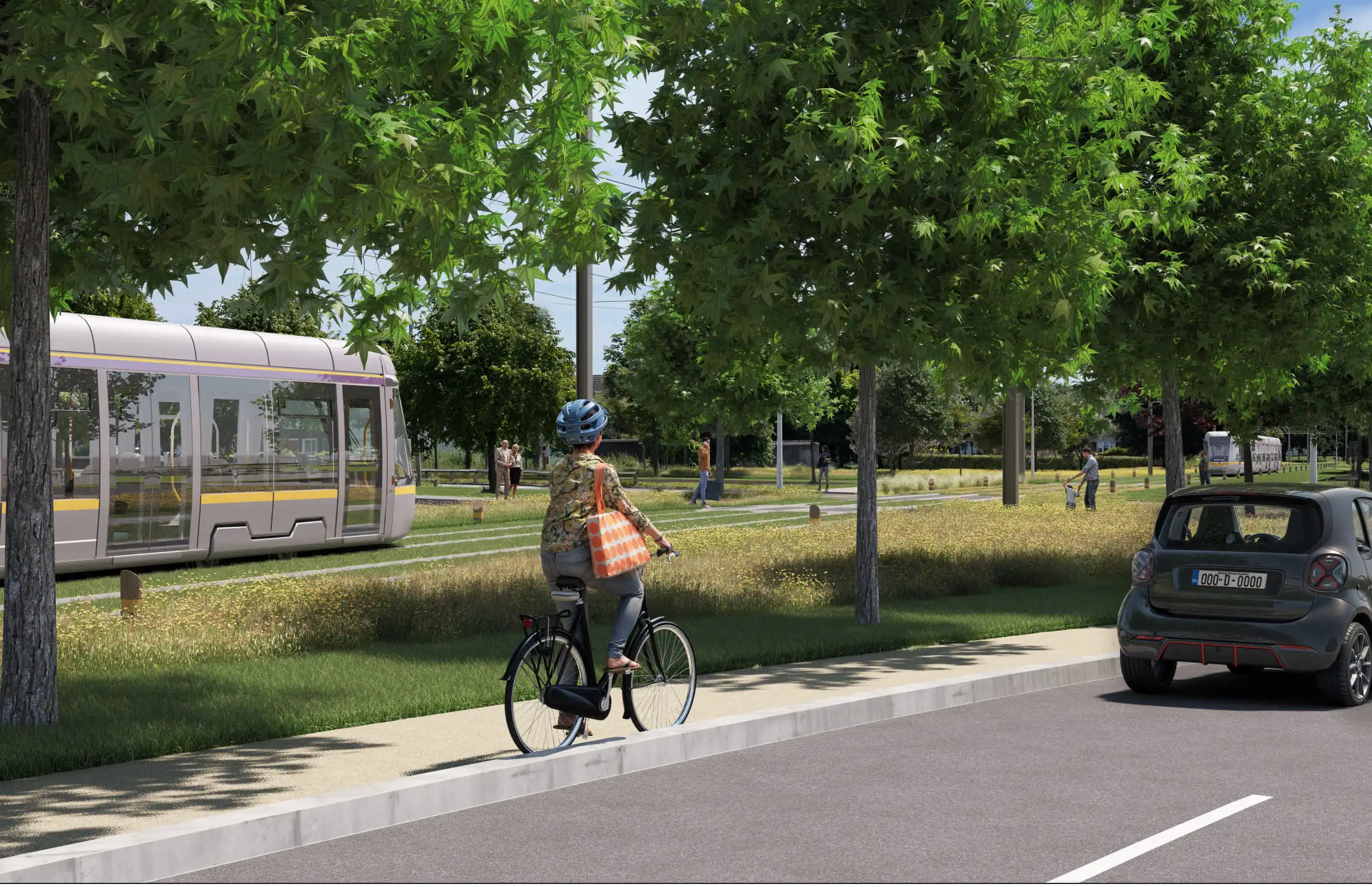
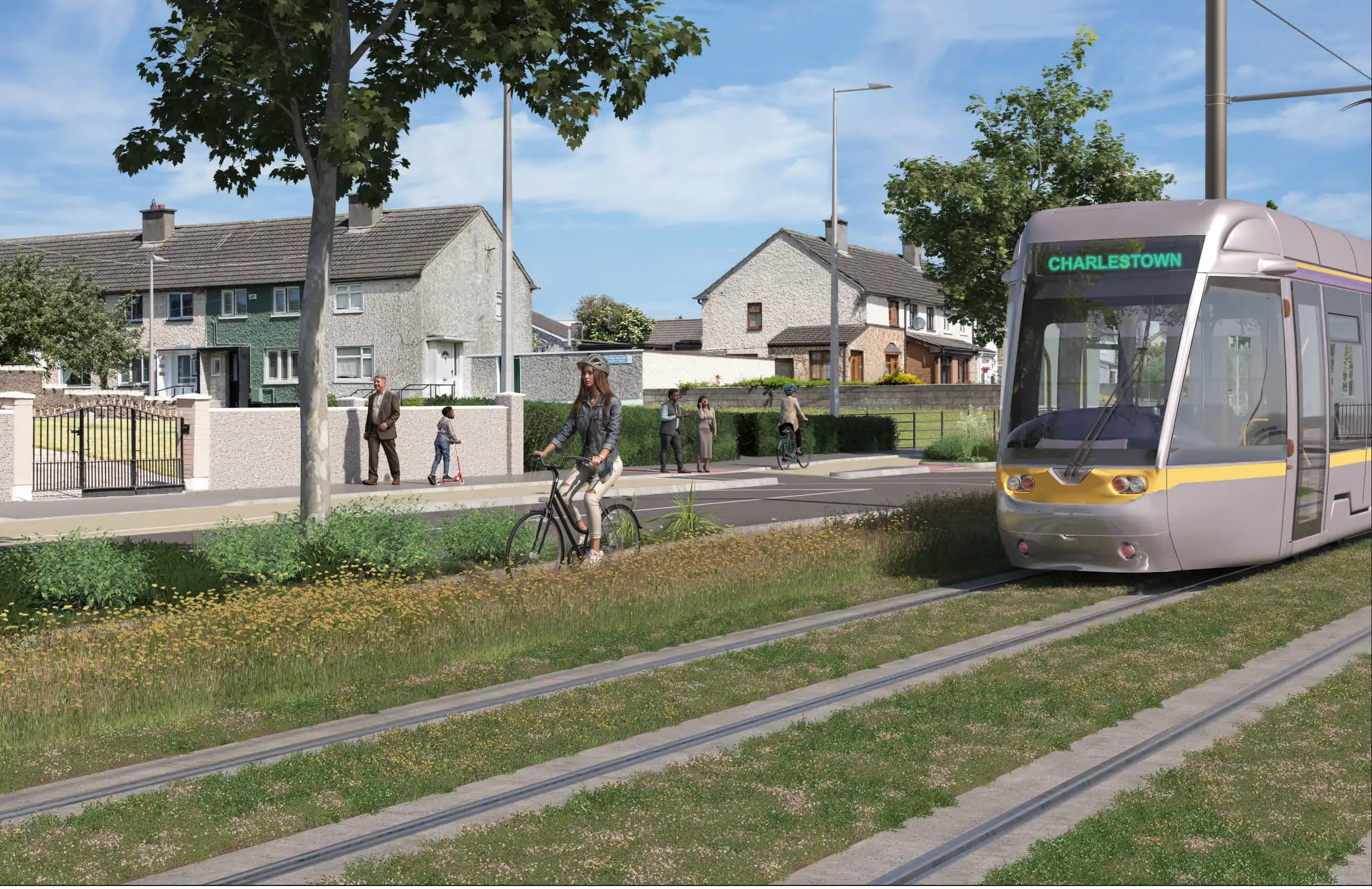
The scheme includes four new stops, two new bridges, a Park and Ride facility, and upgrades to the existing Broombridge depot. Much of the route uses sustainable grass track, paired with a new pedestrian and cycle path that runs alongside the line. Together these features encourage a shift away from private car use on the northside.
TII pursued BREEAM Infrastructure to demonstrate the project’s commitment to sustainable, responsible design through an independent, verified framework. The assessment aligned the scheme with national climate and biodiversity goals, and supported a transparent comparison of design options. Luas Finglas also serves as a Circular Economy Demonstration Project for TII.
Challenges
The route passes through areas of real environmental sensitivity, including Tolka Valley Park and established tree corridors. Habitat loss, mature tree removal and biodiversity disturbance were all genuine risks. Tight spatial constraints made it difficult to introduce tram infrastructure without affecting playing fields, footpaths, properties and nearby homes.
The team also had to balance transport efficiency against the needs of local communities. People live, walk and cycle along the corridor every day. The design had to protect open space while reducing journey times, providing a reliable, accessible transport solution that improves everyday journeys rather than disrupting them.
Solutions
BREEAM Infrastructure gave the team a structured, evidence-based way to manage these risks. It prompted lifecycle carbon modelling that shaped early design choices, from minimising cut-and-fill to retaining existing trees and selecting lower-carbon materials.
Early ecological assessment led the team to redesign the alignment around the most sensitive areas. Extensive grass track softens the visual impact, improves habitat continuity and reduces noise. The framework also encouraged the team to go beyond basic mitigation, introducing ecological corridors and native planting to strengthen habitat and support local biodiversity.
Circular economy thinking shaped the trackform as well. Design-for-disassembly principles allow easier maintenance, future upgrades and material reuse, while soil reuse and waste reduction cut the project’s resource demand. The team also applied Jan Gehl public-life survey methods to study how people move through and use the public spaces in and around the Luas Finglas corridor.
Benefits
BREEAM Infrastructure shifted Luas Finglas from a traditional transport scheme towards a holistic, regenerative one. The design delivers transport and green infrastructure at the same time. Based on the design-stage assessment, the scheme is projected to deliver:
- 95 per cent of materials re-used or recycled
- Reduced carbon through a new form of track design
- Extensive sustainable grass track that absorbs surface water, cuts noise and supports urban biodiversity
The project is also expected to generate substantial local benefit. At peak it could support up to 180 direct jobs, and between 350 and 520 roles in total once supply chain impacts are counted. A Local Employment Forum and work with Dublin City Council will support recruitment, training and education in the area.
Segregated walking and cycling links encourage healthier, lower-emission travel. Retained trees, native planting and habitat creation strengthen the area’s ecological value. Together, these measures set a benchmark for sustainable transport delivery in Ireland.
Summary
Luas Finglas has achieved a BREEAM Infrastructure Version 6 Excellent rating of 83.73% at the Strategy and Design stage. It is the first project in the Republic of Ireland to reach this standard, and the first transport scheme in the country to do so. A further award will follow at the post-construction stage as the project moves into delivery.
Project
Luas Finglas
Location
Dublin, Ireland
Client
Transport Infrastructure Ireland (TII)
Designer
Barry Transportation / Egis JV
Assessor
Antía Prados Castro and Leanne Leonard, Egis Engineering Ireland Ltd
Verifier
Dion Williams, DWW Consulting Ltd
Scheme
BREEAM Infrastructure Projects, Version 6
Award
Strategy & Design (Whole Project Award)
Rating
Excellent, 83.73%
Certified
14 November 2025
Reference
BIA 936/1.0
Browse more from our latest case studies:
UK & Ireland
Luas Finglas: Ireland’s first BREEAM Infrastructure Excellent rating
UK & Ireland
BREEAM Infrastructure: 10 Dock Facility submarine dockyard excellence
UK & Ireland
BREEAM Infrastructure: Hove Hensetting rail stabling excellence
Case Study
BREEAM Infrastructure: Fv.44 Bussveien sustainable urban busway
Case Study