
Cart (0)
Key takeaways from ICE Resilient Transport 2026
At BRE’s panel debate at ICE Resilient Transport 2026 in Manchester, UK, delegates discussed when resilience enters infrastructure projects, who is responsible for it and the role of assessment schemes.
1. Resilience is often measured late, if at all
Asked when resilience first gets a number attached to it on their projects, 45% of delegates said after construction, if at all. Asked why resilience measures are reduced or removed, the most common answer was capital cost, at 44%. The session followed the Institution of Civil Engineers' September 2026 paper Making Resilience Count, which concludes that the UK underinvests in resilience because the actions that deliver it are “not measured or rewarded commensurate with their value”. Alistair Kean, Director for Sustainability at COWI, said: “Resilience is still … not a major part of decision-making on our infrastructure projects. That is an indictment of our industry.
2. The panel agreed on timing
Swati Singh, Energy and Sustainability Global Lead at CBRE, put the panel’s shared position in six words: “Measure early so you can influence early.” Chair Melanie Manton made the same point: resilience “does not just happen”, and engineers, designers and clients “need to start the conversation early enough, because we are accountable”.
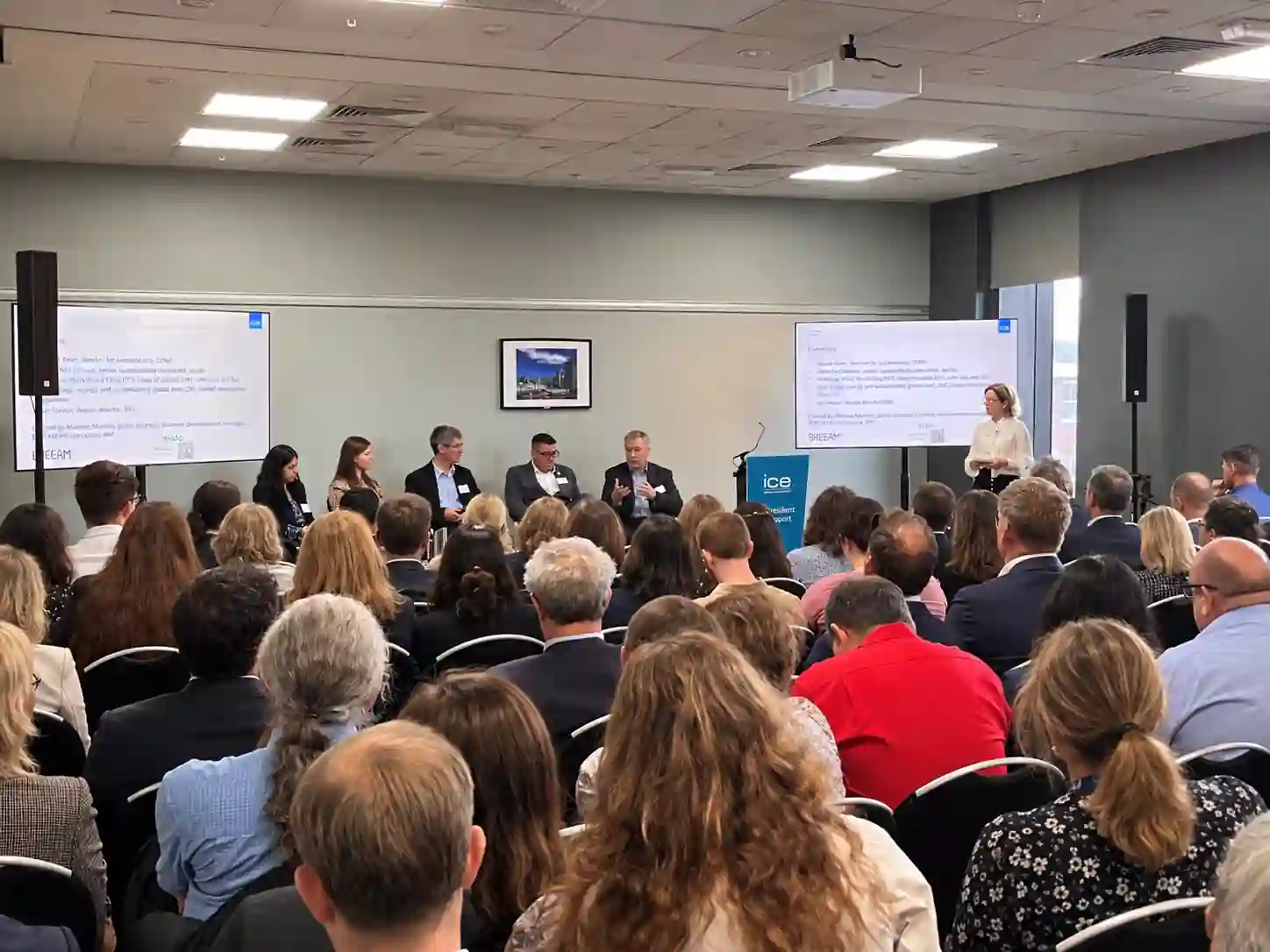
The panel at ICE Resilient Transport 2026, Manchester, UK
3. Panellists looked at resilience at three levels
Alistair Kean started with the individual engineer: “Every engineer has a responsibility to know the resilience requirements and risks on their projects, and to make sure they are addressed, even if that means recording in a design decision log why they could not be.” Grace McCormack, Senior Sustainability Consultant at Jacobs, looked at the whole network.. Transport networks, she said, are resilient “when the system as a whole can adapt, deliver outcomes for users and recover quickly when disruption occurs”. Melanie Manton said the project team cannot do it alone: “We need industry and government on board.”
4. Assessment schemes can help explain and improve resilience
Ian Slesser, Deputy Director at BRE, saw a role for assessment schemes in helping everyone “tell that story, explain what resilience actually means and improve it across our network”. That gives sponsors and asset owners a clearer basis for comparing options, demonstrating value and tracking improvement.
5. Challenging the norm may be necessary
Professor Perry Shard, Head of Quality (UK) at John Sisk and Son, said: “Sometimes when you meet resistance, you have to be radical and brave enough to challenge the norm.” His point was that evidence and standards need to be matched by a willingness to question established assumptions.
For a discussion about how BREEAM Infrastructure can support the assessment of resilience on your schemes, contact breeaminfrastructure@bregroup.com.
Browse more from our latest news:

Events
Driving sustainability with Refurbishment and Fit Out V7

BREEAM
What investors look for in build to rent developments
BREEAM
Key takeaways from ICE Resilient Transport 2026

BREEAM
BREEAM Webinar Series: Maximising the Value of Existing Buildings with BREEAM In-Use
Construction