
Cart (0)
BREEAM V7: what the new standard means for Hungary's property market
The latest, seventh version of the BREEAM third-party accreditation system places a stronger emphasis on advancing decarbonisation efforts to mitigate climate risk, experts say. The system also aims at further improving sustainability across all stages of a building’s lifecycle.
“As the leading global standard guiding decarbonisation, V7 provides a framework for more rigorous operational and embodied carbon benchmarking to drive significant change and continued progress across all building types at every stage of the asset lifecycle,” says Zsombor Barta, founding partner of Greenbors Consulting.
“It evaluates every gram of CO2 a building produces, from the extraction of raw materials (embodied carbon) to the energy used during its decades of operation, all the way to its eventual disassembly (circular economy),” he says. “The goal is to provide a scientifically rigorous, transparent roadmap that ensures a building is truly ‘net-zero ready’ rather than just slightly more efficient than the status quo.”
Barta argues that there are three critical reasons to adopt these higher standards: Firstly, to bridge the performance gap: V7 introduces stricter predictive modelling and monitoring, forcing teams to be accountable for real-world results.
Next comes financial and regulatory alignment with the EU taxonomy. The investment landscape has changed in Hungary and across Europe. Banks and investors now demand alignment with the EU taxonomy. BREEAM NC V7 is specifically designed to provide the data evidence required for “Green Finance,” making it an essential tool for developers to secure capital and future-proof their assets against upcoming regulations.
Finally, tackling embodied carbon: climate targets cannot be reached without measuring and reducing this vital metric. V7 makes life-cycle assessments mandatory at the earliest design stages, where the most impact can be made.
“With regard to CEE, 85% of quality office space is sustainability certified in Poland, the Czech Republic, Hungary, Slovakia and Romania,” says James Fisher, head of strategic partnerships at BRE Group. He sees the system as effective in transactions and contributing to risk resilience for lenders and funders.
Resilient, Circular, Sustainable
In Hungary, where BREEAM is the leading certification system, this update is seen as ensuring that local developments remain competitive on the global stage. It is no longer enough to be “less bad” for the environment; we must build assets that are resilient, circular, and quantifiably sustainable, argues Barta. Further, V7’s “data-driven strategies” mean developers must move from an era of design promises to one of performance proof.
“We use whole life carbon assessments to track every kilogram of CO2 from the foundation stone to the day the building is eventually dismantled. In a market like Hungary, where the energy grid is gradually decarbonising, this data allows us to focus on the ‘embodied carbon’ in materials like concrete and steel, which is where the real climate battle is won,” Barta argues.
“For climate adaptation and biodiversity, ‘data-driven’ means stress-testing our assets against the future. Climate projection data is used to ensure that a building in Budapest remains comfortable in the heatwaves of 2050. Similarly, we now use ecological metrics to prove a Net Bio-diversity Gain, treating the site’s ecosystem as a measurable asset that provides cooling and water management,” he adds.
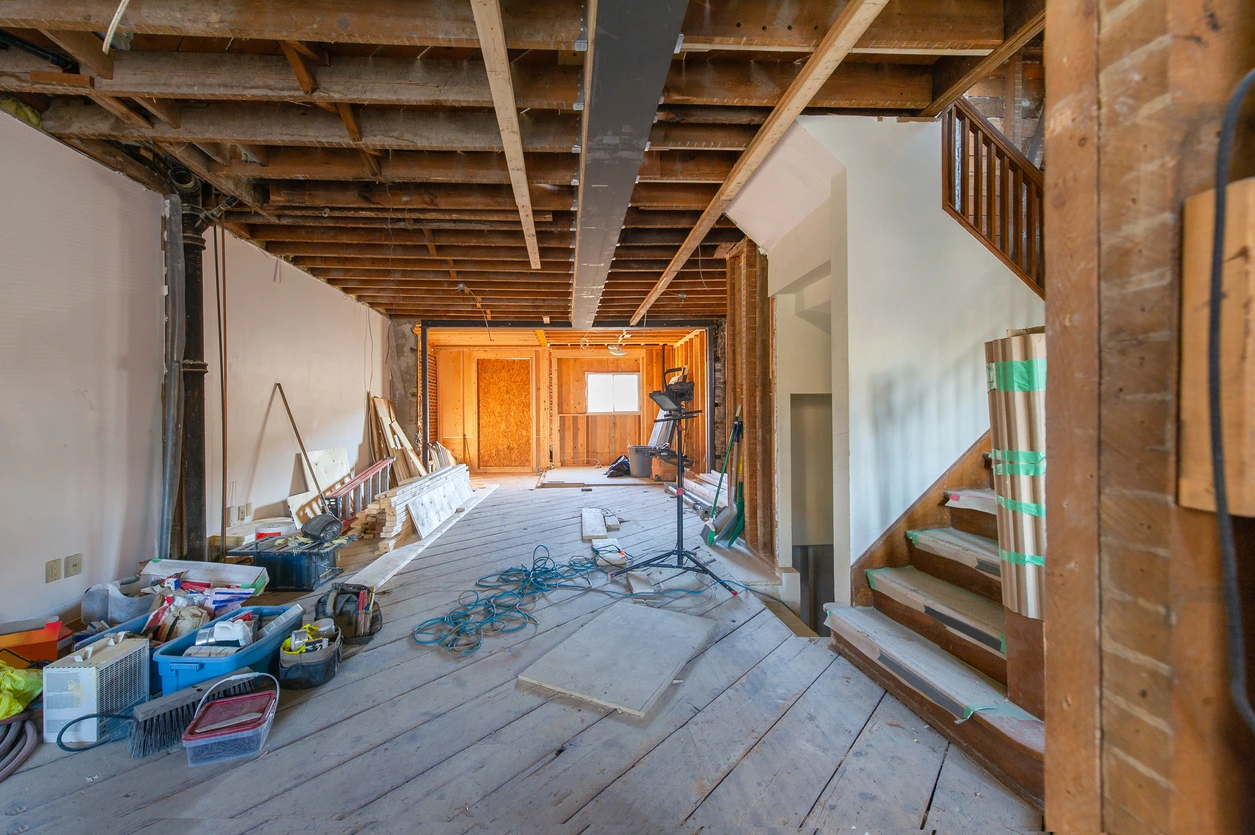
Concerning the differentiation between new build and refurbishment, Barta says BREEAM V7 is bridging the gap. “In Hungary and across CEE, the greatest challenge – and opportunity – lies in the existing building stock. Here, V7 shifts the focus to circularity and preservation. The system recognises the massive carbon savings achieved by using existing material. By keeping the concrete shell of a building, you have made significant carbon savings,” he says.
“Unlike new builds, which are measured against an absolute high bar, refurbishment under the new system focuses on the scale of improvement. We look at how effectively we can ‘turbocharge’ an ageing asset’s performance. In short, a new build is about performance by design; refurbishment is about performance by intervention. Both are now measured with the same rigorous data, ensuring a level playing field for the first time,” Barta adds.
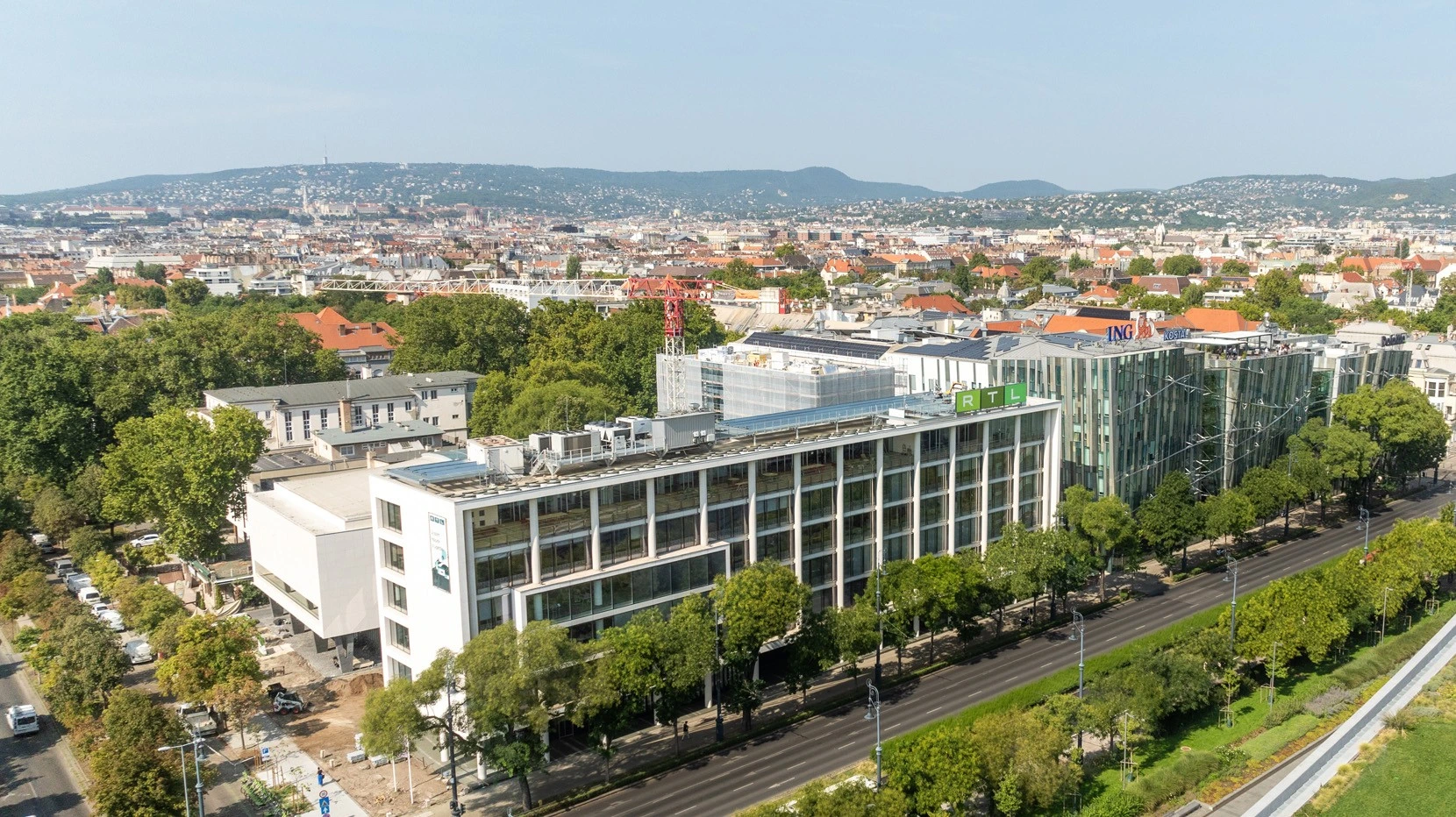
The leading Hungarian developer Wing’s Liberty office and hotel complex has a BREEAM in-use V6 Part 1 “Outstanding” verification. The same developer has also handed over the BREEAM “Very Good”- accredited Liget Centre renovation and redevelopment project in Városliget, part of which is a nearly zero energy building.
Search for ‘safe harbours’
In the near term, Barta sees a sharp bifurcation of the market. “We are moving away from speculative volume toward a decisive ‘flight to quality.’ Investors and tenants are no longer just looking for square meters; they are looking for ‘safe harbours,’ assets that satisfy strict ESG and EU taxonomy requirements. For Budapest, this means that buildings providing auditable, concrete data on carbon and energy performance will maintain their liquidity and attract international capital, while older, inefficient stock risks becoming stranded,” he says.
The latest version of BREEAM can be viewed as a “triple-win” for the local economy, the consultant argues. “For building owners, it is about protecting asset value. In the CEE region, certified green buildings are now seeing a ‘green premium’ of up to 10% in higher rents and a significant 21% increase in transaction prices compared to non-certified assets. Furthermore, in Hungary, the national bank provides a 5–7% capital requirement discount for green loans, making these projects significantly cheaper to finance,” Barta notes.
“For tenants, the focus shifts to the bottom line and human capital. BREEAM ‘Excellent’ buildings can reduce energy consumption by up to 40%, providing a massive shield against volatile energy prices. More importantly, since staff costs typically represent 90% of a business’s operating costs, the improved air quality and natural light in V7-aligned buildings will directly boost productivity and retention, turning the office into a tool for talent competition,” he argues.
“For the wider society, this is our most effective tool for climate resilience. BREEAM offices save an average of 24% in carbon emissions, but the impact goes further. By mandating biodiversity net gains and ‘future-proofing’ against 2050 heat wave data, these buildings reduce the strain on our city’s infrastructure and help mitigate the urban heat island effect, ensuring Budapest and other regional hubs remain liveable for the next generation. In short, for the owner, it’s profit; for the tenant, it’s performance; and for society, it’s resilience,” Barta concludes.
This article was first published in the Budapest Business Journal print issue of 22 May 2026.
Browse more from our latest insights:
BRE Group
BREEAM V7: what the new standard means for Hungary's property market
Residential
New homes in new towns can exemplify sustainability and resilience

USA
How Building Performance Standards Are Accelerating Demand for BREEAM in the U.S.
Construction
We can’t ignore hydrogen’s potential in construction
Infrastructure
Passive design: the way forward for future-resilient infrastructure
BRE Group
Patent pending: unlocking retrofit innovation

Construction