
Cart (0)
Passive design: the way forward for future-resilient infrastructure

As someone who likes to think a lot about future trends, I often find myself returning to what might appear, at first glance, to be the opposite direction of travel: passive design, with traditional, local approaches to building. The more I study highly networked, sensor-rich, energy-storing cities, the more I recognise that climate resilience is not only something engineered through complexity, but also something inherited from simplicity.
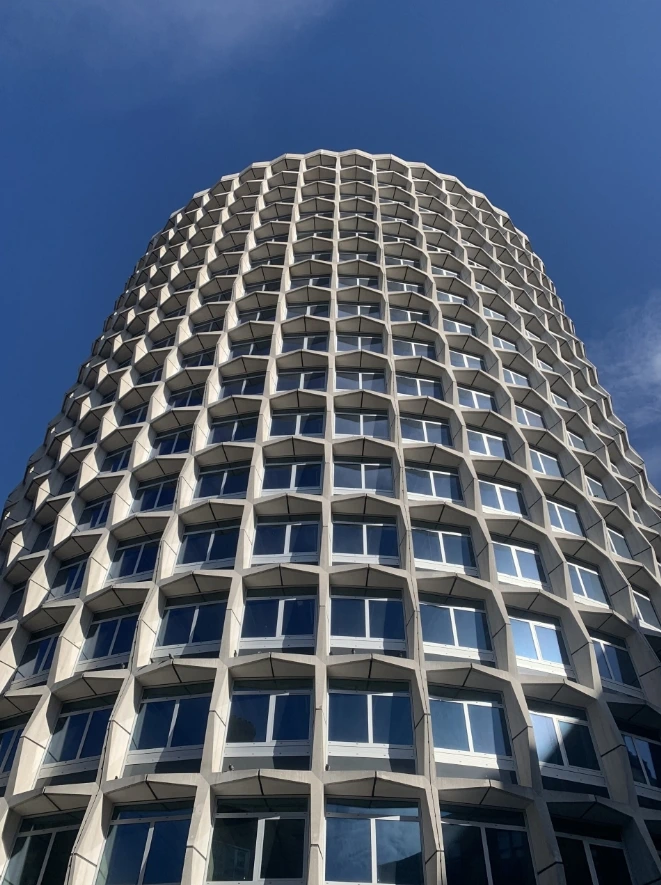
I see future-resilient infrastructure not abandoning vernacular wisdom but absorbing it. Thick-walled buildings that moderate heat through thermal mass, shaded courtyards that create microclimates, well-oriented street patterns, and locally sourced materials tuned to specific geographies, all of these are early forms of climate intelligence.
In many ways, they achieved what we now try to simulate with algorithms: equilibrium with the environment rather than domination of it.
Passive design principles in the smart city
What interests me most is how these passive logics will re-enter the high-tech city. A digitally managed district may still rely on predictive analytics and energy storage systems, but its baseline resilience may come from low-energy design principles that reduce the need for intervention in the first place. In other words, the smartest system is often the one that does least.
I find this tension neatly captured in a line often attributed to architect Louis Sullivan: ‘Form follows function.’ In the context of future infrastructure, I interpret this less as a stylistic rule and more as a warning, that even the most advanced systems must remain grounded in the fundamental common sense of use, climate, and place.
In this sense, the resilience of infrastructure increasingly depends on balancing technological innovation with passive environmental performance.
Adaptive architecture for climate resilience
At the same time, I see entirely new building typologies emerging that break from both tradition and modernist assumptions. The building is no longer a single, stable object but a portfolio of adaptive forms. I anticipate ‘liquid buildings’ that reconfigure internal layouts in real time; ‘seasonal buildings’ that physically expand and contract with climate cycles; and ‘temporary-permanent hybrids’ where structures are designed with deliberate phases of decay, renewal, and reassembly rather than permanence as a default condition.
Alongside this, I see a growing category of what I would call infrastructural buildings, structures whose primary purpose is not occupancy, but system regulation. Energy towers that behave more like urban batteries than real estate. Water buildings that function as flood buffers, filtration engines, and storm surge absorbers. Mobility buildings that act as exchange nodes between pedestrians, autonomous vehicles, and logistics drones.
These are not buildings in the traditional sense; they are operational organs within the city and public realm.
Climate-responsive architecture and material innovation
Increasingly, I also observe what might be described as inorganic architectural trends. These are not organic in the biomimetic sense of copying nature, but inorganic in their embrace of mineral, synthetic, and computational matter as primary design drivers.
Materials become semi-intelligent composites—self-healing concretes, phase-changing surfaces, carbon-absorbing facades. Surfaces behave less like skins and more like active chemical interfaces with the atmosphere. In this trajectory, architecture starts to resemble geology that has learned to calculate and adjust. This pushes climate responsive architecture into a new era.
Even the boundary between infrastructure and material begins to blur. A wall is no longer just enclosure; it is energy storage, data relay, environmental sensor, and structural element simultaneously. Cities begin to resemble stratified systems of engineered geology layered with computational intelligence.
The future of climate-resilient buildings
From where I stand, the evolution of resilient infrastructure is not a single direction but a convergence. Passive design based on traditional intelligence, high-frequency digital infrastructure, and emerging inorganic material systems are all moving toward the same endpoint: buildings that are less about form as object, and more about function as ongoing process.
In that world, resilience is not a feature added to buildings, it is the governing logic of their existence. The most successful buildings of the future, I believe, will be those that behave least like objects and most like systems.
Discover how BREEAM supports resilient infrastructure
As infrastructure systems evolve to meet the challenges of climate change, resource pressures and urban growth, resilience can no longer be treated as an afterthought. From passive design strategies to adaptive materials and intelligent systems, the future resilience of infrastructure will depend on balancing environmental performance with long-term flexibility.
BREEAM Infrastructure supports the delivery of more sustainable, climate-resilient infrastructure across the asset lifecycle, helping projects improve environmental, social and economic performance while preparing for the challenges of the future.
Frequently asked questions
Passive design is an approach to building design that uses natural environmental conditions, such as sunlight, shade, ventilation and thermal mass, to maintain comfortable indoor environments while reducing energy demand. In infrastructure and urban design, passive design principles can support climate resilience by reducing reliance on mechanical systems and improving long-term efficiency.
Passive design helps improve climate resilience by enabling buildings and infrastructure to respond naturally to changing environmental conditions, including rising temperatures and extreme weather events.
Climate responsive architecture includes design strategies that respond to local climate conditions. Examples include thick-walled buildings that use thermal mass to regulate temperature, shaded courtyards that create cooler microclimates, well-oriented buildings that maximise daylight while reducing heat gain, and the use of locally sourced materials suited to regional environments.
Climate resilient buildings are designed to adapt to changing environmental stresses such as heatwaves and flooding. Unlike traditional buildings that may rely heavily on mechanical systems, climate resilient buildings often combine passive design strategies with smart technologies and adaptive materials to improve long-term performance and resilience.
Smart infrastructure can enhance low energy building design by using sensors, predictive analytics and energy management systems to optimise performance. When combined with passive design principles, smart technologies can significantly help to strengthen the resilience of infrastructure systems.
Social Share
Sign up to our newsletter
Get the latest news about BREEAM, BREEAM Infrastructure, Home Quality Mark and more in your inbox.
Sign upBrowse more from our latest blogs:
Infrastructure
Passive design: the way forward for future-resilient infrastructure

Construction
What is a site waste management plan (SWMP) and how to implement one
BREEAM
Why BREEAM New Construction V7 Matters for Carbon Reduction and the Future of Sustainable Buildings

Construction
Closing the loop: practical steps toward circular construction
BREEAM
How BREEAM Infrastructure supports public sector sustainability targets
BREEAM